
These are the 100 poems behind karuta — the card game from the anime Chihayafuru — chosen near Kyoto over 800 years ago, and still memorized by children across Japan today. This is one of them.
What is Hyakunin Isshu? Read the full guide
The poem
これやこの 行くも帰るも 別れては 知るも知らぬも 逢坂の関
Romaji: Kore ya kono / yuku mo kaeru mo / wakarete wa / shiru mo shiranu mo / Ōsaka no seki
So this is the place! Those setting out and those coming home,
those who part and those who meet again, the known and the unknown —
all of them, here at the Barrier of Ōsaka.
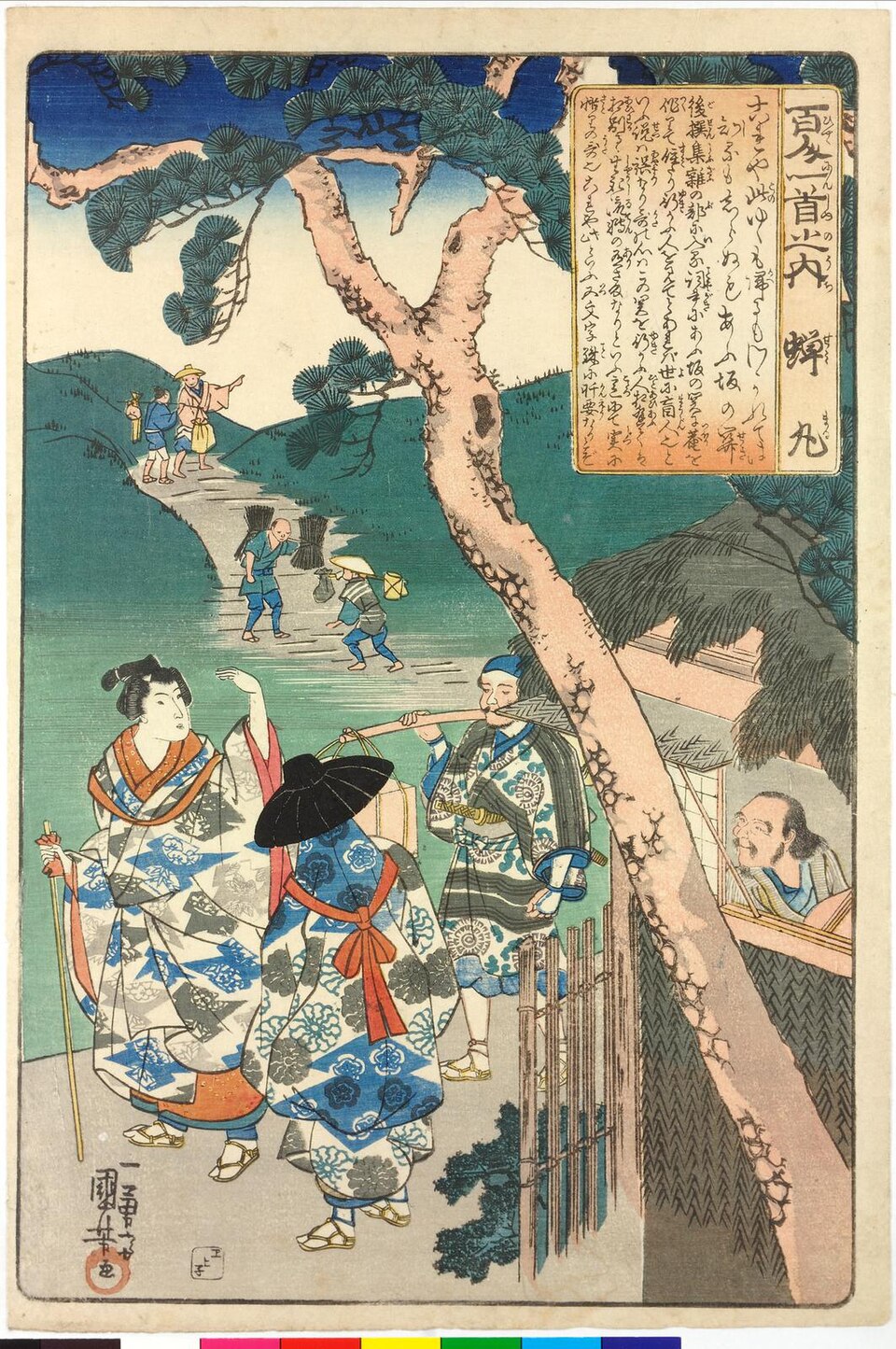
Who was Semimaru?
Semimaru was a blind musician and recluse who, by legend, lived beside the Ōsaka Barrier — the great checkpoint on the road between the capital and the eastern provinces. He appears as a biwa-playing figure in many later tales and Noh plays.
Meaning & background
The Ōsaka Barrier — whose name puns on “meeting hill” — was the gate every traveler passed, leaving the capital or returning to it. Standing there, the poet watches the endless human tide: strangers and friends, departures and reunions, all flowing through one point. It is a quiet meditation on how every meeting holds a parting — a fitting poem for anyone setting out on, or returning from, a journey to Japan.
The commemorative medal
[ メダル画像をここに挿入 / alt: “Hyakunin Isshu Poem 10 Semimaru commemorative brass medal” ]
Each poem in the Hyakunin Isshu is cast as a 31mm brass commemorative medal, struck by master craftsmen in Japan — the poem and its poet pressed into metal that will not fade.
Explore the series
Poem 9 (Ono no Komachi) · Poem 11 (Ono no Takamura) · What is Hyakunin Isshu? Full guide