
These are the 100 poems behind karuta — the card game from the anime Chihayafuru — chosen near Kyoto over 800 years ago, and still memorized by children across Japan today. This is one of them.
What is Hyakunin Isshu? Read the full guide
The poem
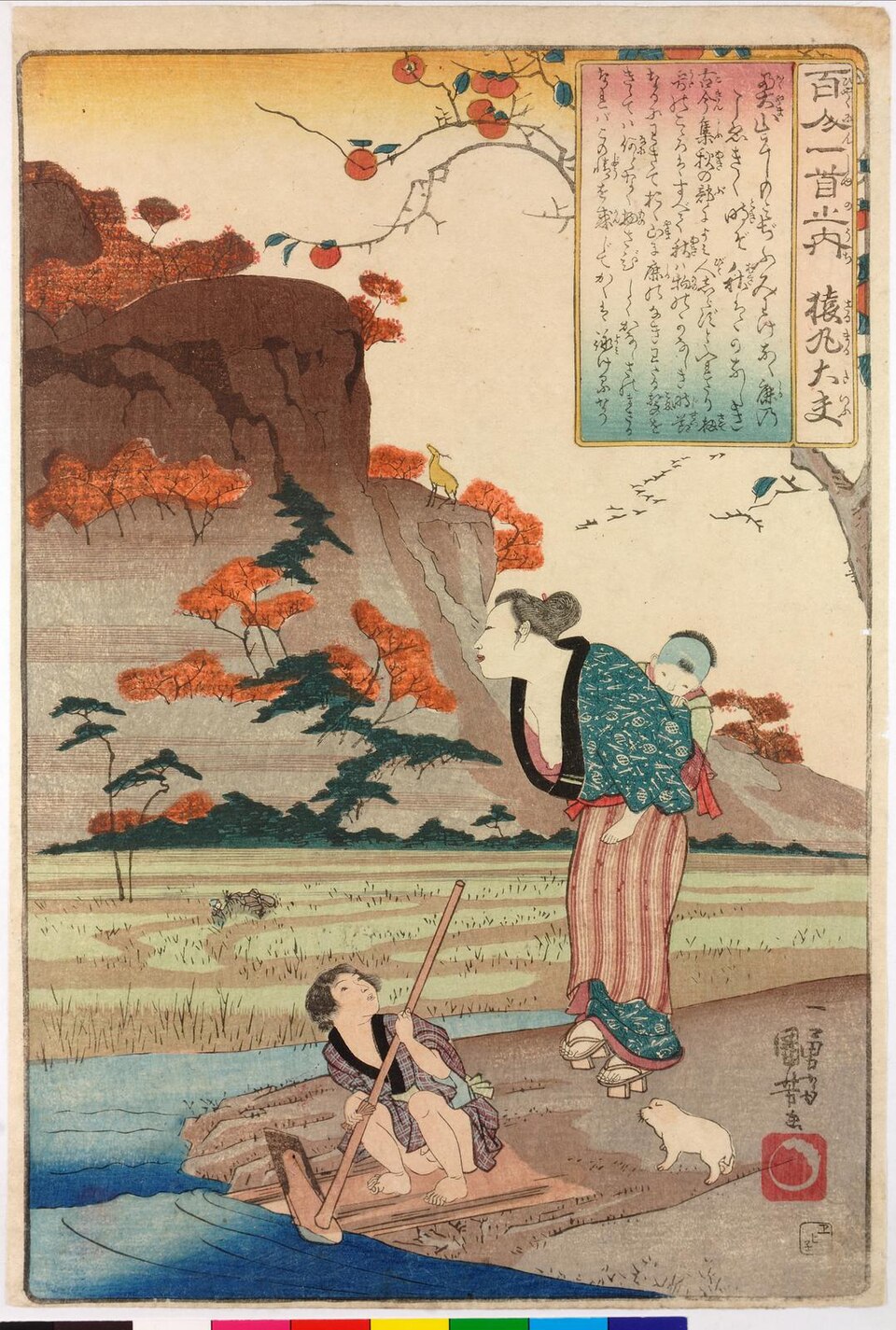
奥山に 紅葉踏みわけ 鳴く鹿の 声聞く時ぞ 秋は悲しき
Romaji: Okuyama ni / momiji fumiwake / naku shika no / koe kiku toki zo / aki wa kanashiki
Deep in the mountains, treading through fallen crimson leaves,
a stag cries out —
and hearing that voice, I feel the full sorrow of autumn.
Who was Sarumaru Dayū?
Here is something remarkable: no one is entirely sure he existed. Sarumaru Dayū is a near-legendary figure, and scholars still debate whether he was a real poet, a title, or a name attached to verses by an unknown hand. And yet his poem stands among the hundred, recited for centuries. The author may be a mystery — the poem is not.
Meaning & background
This poem is a masterpiece of mono no aware — the Japanese sensitivity to the beauty in things that pass. A lone stag, deep in autumn mountains, walks through a carpet of red maple leaves and calls out, searching for a mate. The poet hears it, and in that single sound feels the whole melancholy of the season. Two of Japan’s most beloved autumn images — crimson maple leaves (momiji) and the cry of the deer — are fused into one moment of quiet heartbreak. If you visit Japan in autumn for the famous fall colors, this is the emotion the season has carried for over a thousand years.
The commemorative medal
[ メダル画像をここに挿入 / alt: “Hyakunin Isshu Poem 5 Sarumaru Dayu commemorative brass medal” ]
Each poem in the Hyakunin Isshu is cast as a 31mm brass commemorative medal, struck by master craftsmen in Japan — the poem and the figure of its poet pressed into metal that will not fade.
View the full medal collection
Explore the series
Poem 4 (Yamabe no Akahito) · Poem 6 (Ōtomo no Yakamochi) · What is Hyakunin Isshu? Full guide