
These are the 100 poems behind karuta — the card game from the anime Chihayafuru — chosen near Kyoto over 800 years ago, and still memorized by children across Japan today. This is one of them.
What is Hyakunin Isshu? Read the full guide
The poem
天の原 ふりさけ見れば 春日なる 三笠の山に 出でし月かも
Romaji: Ama no hara / furisake mireba / Kasuga naru / Mikasa no yama ni / ideshi tsuki kamo
I gaze far out across the plain of heaven —
is this the same moon that once rose over Mount Mikasa, at Kasuga, back home?
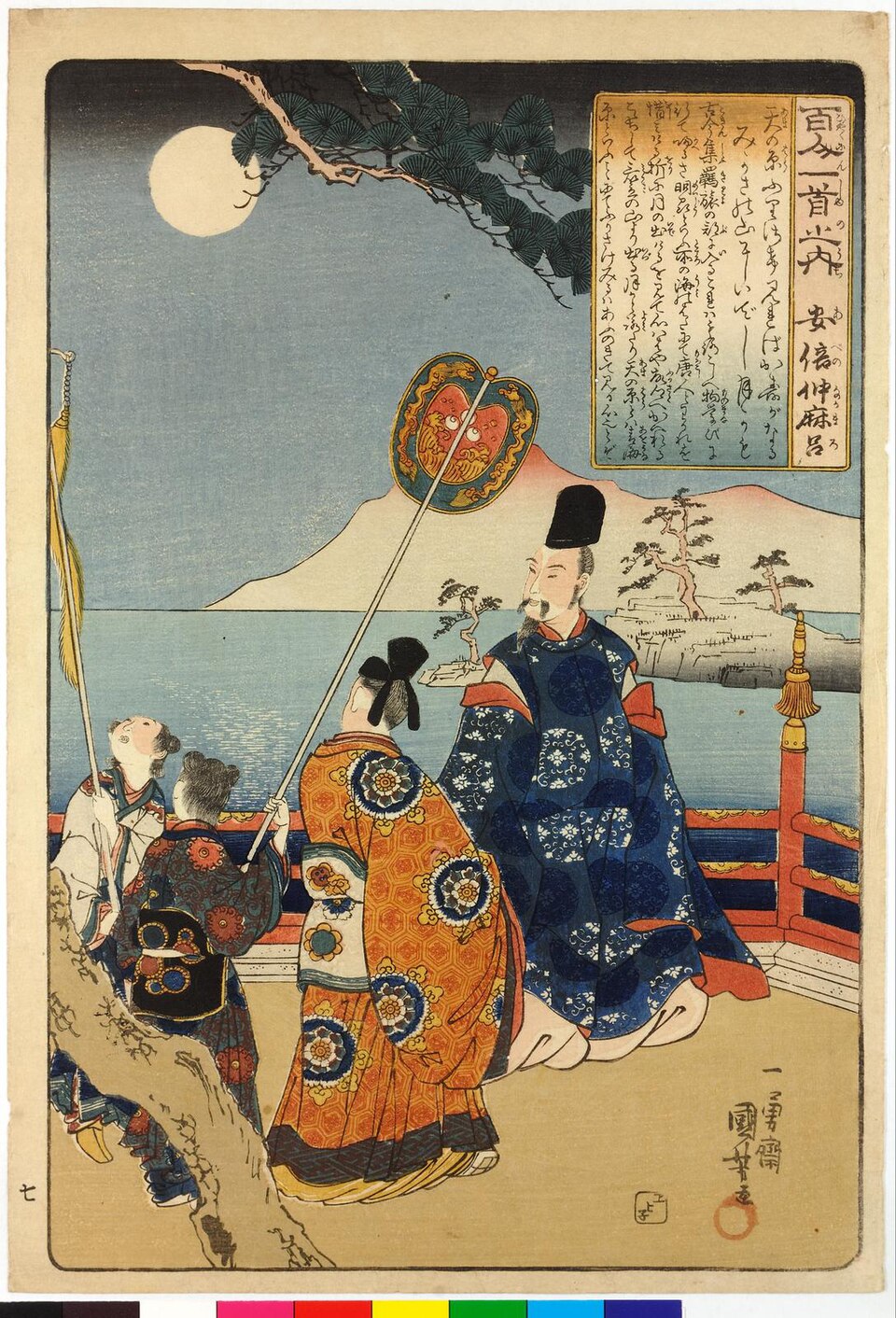
Who was Abe no Nakamaro?
Abe no Nakamaro (701–770) sailed to Tang China as a young scholar-envoy and rose high in the Chinese court — but storms and fate kept him from ever returning to Japan. He died in China, an exile for life.
Meaning & background
This poem is said to have been written abroad, gazing at the moon over a foreign land. The same moon also rises over Mount Mikasa back home in Nara — and in that one shared moon lies a lifetime of homesickness. Few poems in any language hold the ache of exile so simply. If you have ever looked up at the moon far from home, you have felt exactly this, 1,300 years later.
The commemorative medal
[ メダル画像をここに挿入 / alt: “Hyakunin Isshu Poem 7 Abe no Nakamaro commemorative brass medal” ]
Each poem in the Hyakunin Isshu is cast as a 31mm brass commemorative medal, struck by master craftsmen in Japan — the poem and its poet pressed into metal that will not fade.
Explore the series
Poem 6 (Ōtomo no Yakamochi) · Poem 8 (Kisen Hōshi) · What is Hyakunin Isshu? Full guide