
What is Hyakunin Isshu?
In the 13th century, on a quiet mountainside outside Kyoto, a poet chose one hundred poems by one hundred poets. The collection he created — the Hyakunin Isshu — would go on to shape how Japan reads poetry, plays games, and understands beauty for the next thousand years.
01 — The OriginA Villa on Mount Ogura
The full name is Ogura Hyakunin Isshu (小倉百人一首), meaning “One Hundred People, One Poem Each from Mount Ogura.” It was compiled by Fujiwara no Teika (1162–1241), one of the most influential poets in Japanese literary history.
According to tradition, Teika was asked by his son’s father-in-law, Utsunomiya Yoritsuna, to choose one hundred poems to decorate the sliding screens of a villa near Mount Ogura, on the western edge of Kyoto. Teika selected one poem each by one hundred poets, copied them in his own elegant handwriting, and sent them across to be mounted on the screens. That quiet, private act of curation became one of the most beloved anthologies in all of classical Japanese literature.
02 — The StructureOne Hundred Poets, Six Hundred Years
Each poem in the Hyakunin Isshu is a waka — a classical Japanese poem of just 31 syllables, arranged in the rhythm of 5–7–5–7–7. Within this tiny form, an entire emotional world can be contained: a single moment of longing, a passing season, a glance never returned.
The hundred poets span nearly six hundred years, from the 7th-century Emperor Tenji (the first poem in the anthology) to Emperor Juntoku in the early 13th century. They include emperors and empresses, court ladies, Buddhist priests, warrior-poets, and recluses. Twenty-one of the hundred poets are women — a remarkable balance for any pre-modern anthology in the world.
03 — The ThemesBeauty, Impermanence, and Quiet Longing
If there is a single thread running through the Hyakunin Isshu, it is the awareness that nothing lasts. Cherry blossoms fall. Autumn deepens into winter. A lover does not write. The moon rises over a field of harvest rice. The Japanese have a word for this delicate awareness of impermanence: mono no aware — the gentle sadness of things passing.
at the hut where I keep watch
— the rough thatching
lets the dew through, and my sleeves
are wet, again, with autumn.
This is the very first poem in the anthology — chosen by Teika to open the entire collection. An emperor, standing alone at night in a farmer’s hut, watching the harvest. The grandeur of his rank, and the humbleness of his vigil. The dew, the cold, the wet sleeves. One small moment, held forever in thirty-one syllables.
04 — Living TraditionFrom Court Poetry to a New Year’s Game
For centuries the Hyakunin Isshu was the preserve of poets, scholars, and the aristocracy. Then, in the Edo period (1603–1867), the poems were printed onto cards, and a new tradition was born: uta-garuta, the Hyakunin Isshu card game, played most often at New Year. A reader chants the first half of a poem; players race to grab the card bearing its conclusion.
That tradition continues today. A company founded in Kyoto in 1889 to produce these very cards still exists — you may know it by its modern name: Nintendo. Competitive karuta has become a serious sport, with national tournaments held each January at Omi Shrine in Shiga, the shrine dedicated to Emperor Tenji himself. In recent years the manga and anime series Chihayafuru introduced the game to a new global audience.
05 — Why It Still MattersThe Memory of a Civilization
Every Japanese student encounters the Hyakunin Isshu in school. Many can recite favorite poems from memory their entire lives. The anthology is woven into Japanese aesthetics — into garden design, the tea ceremony, kimono patterns, the language of the seasons. To understand Japanese culture is, in part, to understand the Hyakunin Isshu.
And these poems are not only Japanese. The longing for a lost lover, the ache of an autumn evening, the wonder of a moon glimpsed between branches — these belong to anyone who has ever paused to feel the world. That is why the Hyakunin Isshu still speaks, across a thousand years, in any language.
06 — Kyoto, Then and NowWhere the Poems Were Born
The Hyakunin Isshu was born in Kyoto, and Kyoto is where it still lives. Mount Ogura still rises above the Saga-Arashiyama district in the city’s western quarter, where Teika kept his villa. Walking those paths today, beneath the same maples and bamboo, one can still feel the same quiet that gave rise to these poems.
It is also from Kyoto that the craft traditions of Japan flow — the metalwork, the woodwork, the paper, the lacquer. Kyoto has always been the place where Japanese beauty is given form. That is why our project, Kyokokusya, was founded here.
Preserving 1000 Years of Poetry in Gold
One hundred poets · one hundred commemorative medals · crafted in Kyoto, Japan.
Read the poems
Explore the poems of the Hyakunin Isshu one by one — the original Japanese, an English translation, and the story behind each.
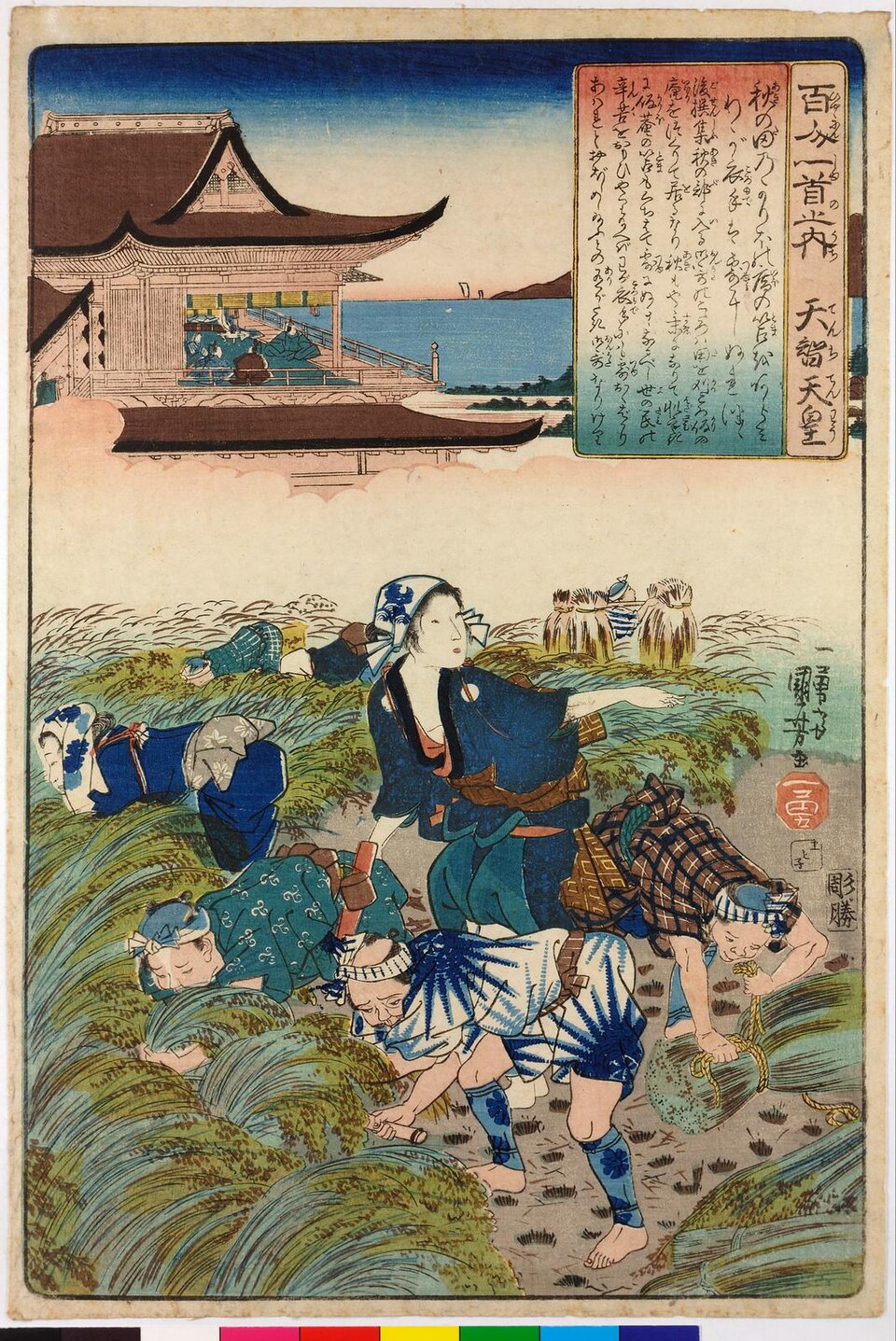 Poem 1 — Emperor Tenji
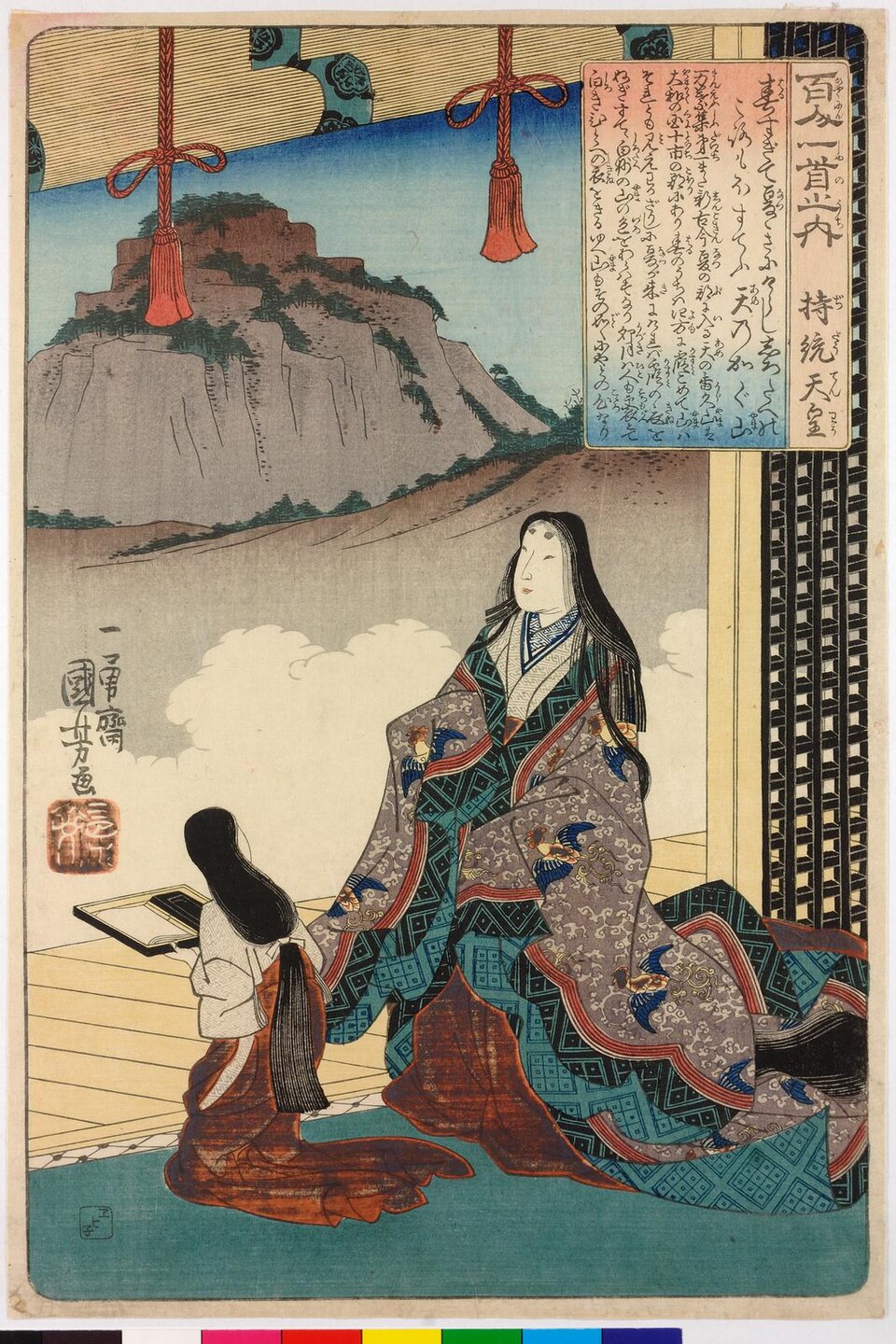 Poem 2 — Empress Jitō
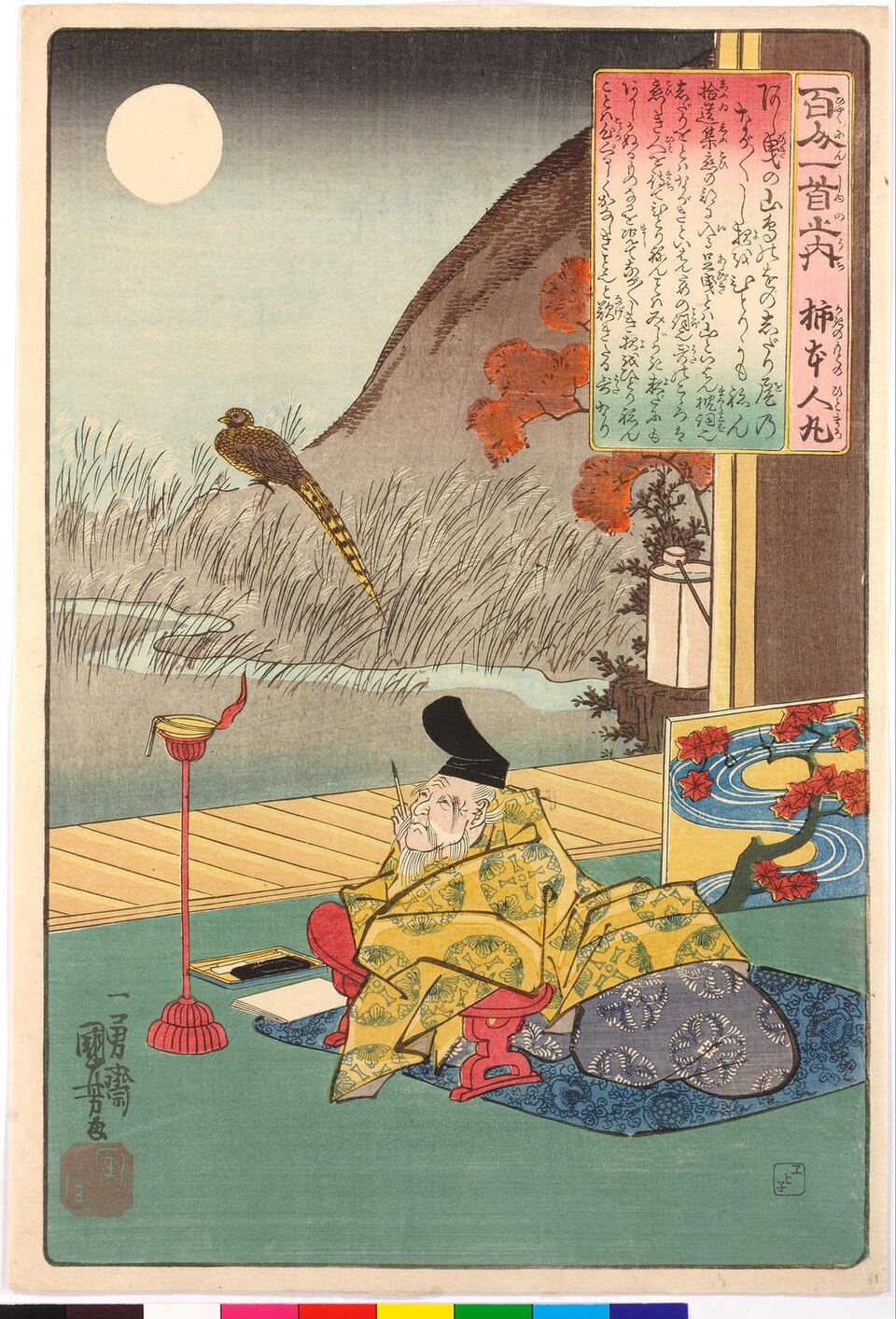 Poem 3 — Kakinomoto no Hitomaro
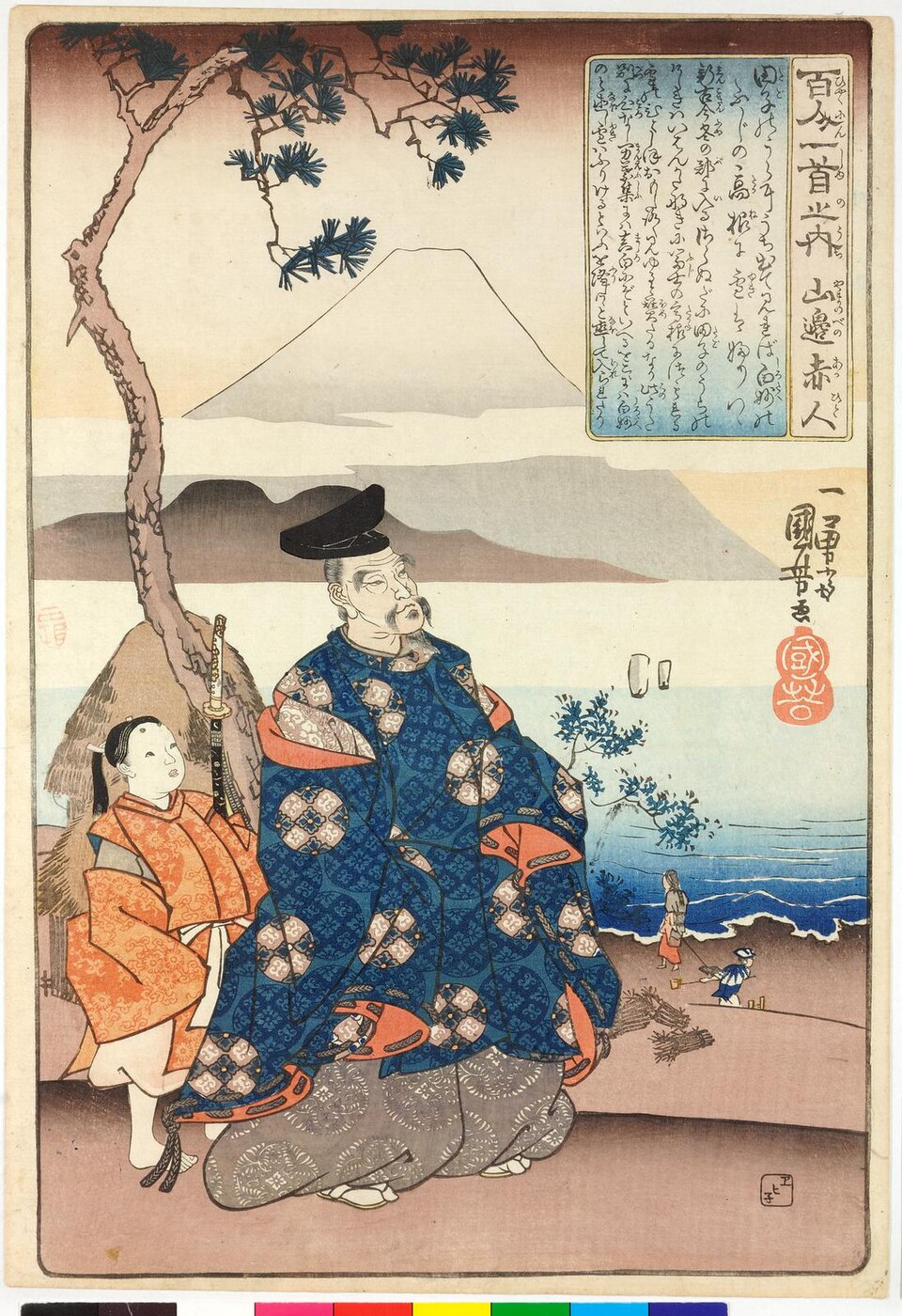 Poem 4 — Yamabe no Akahito
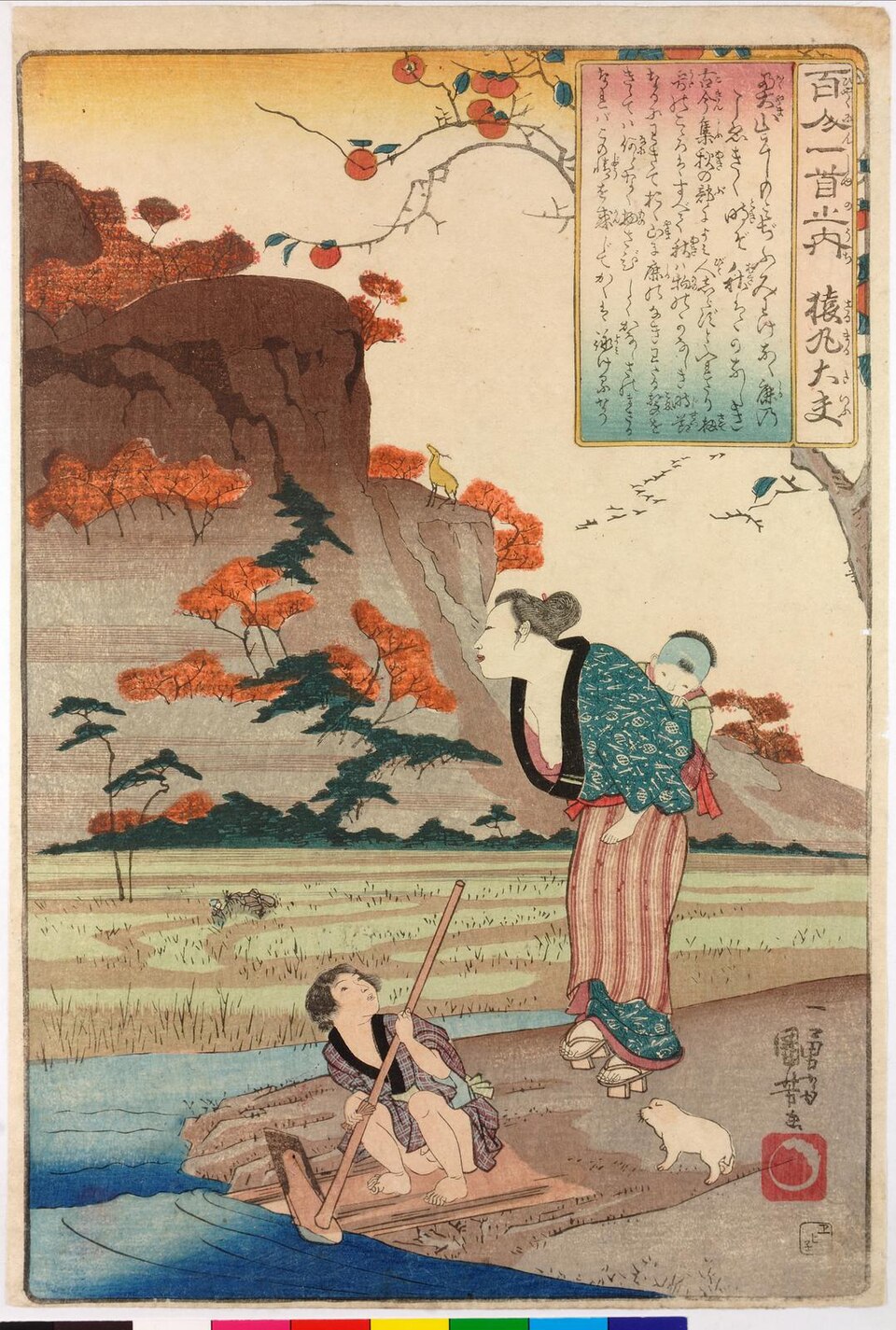 Poem 5 — Sarumaru Dayū
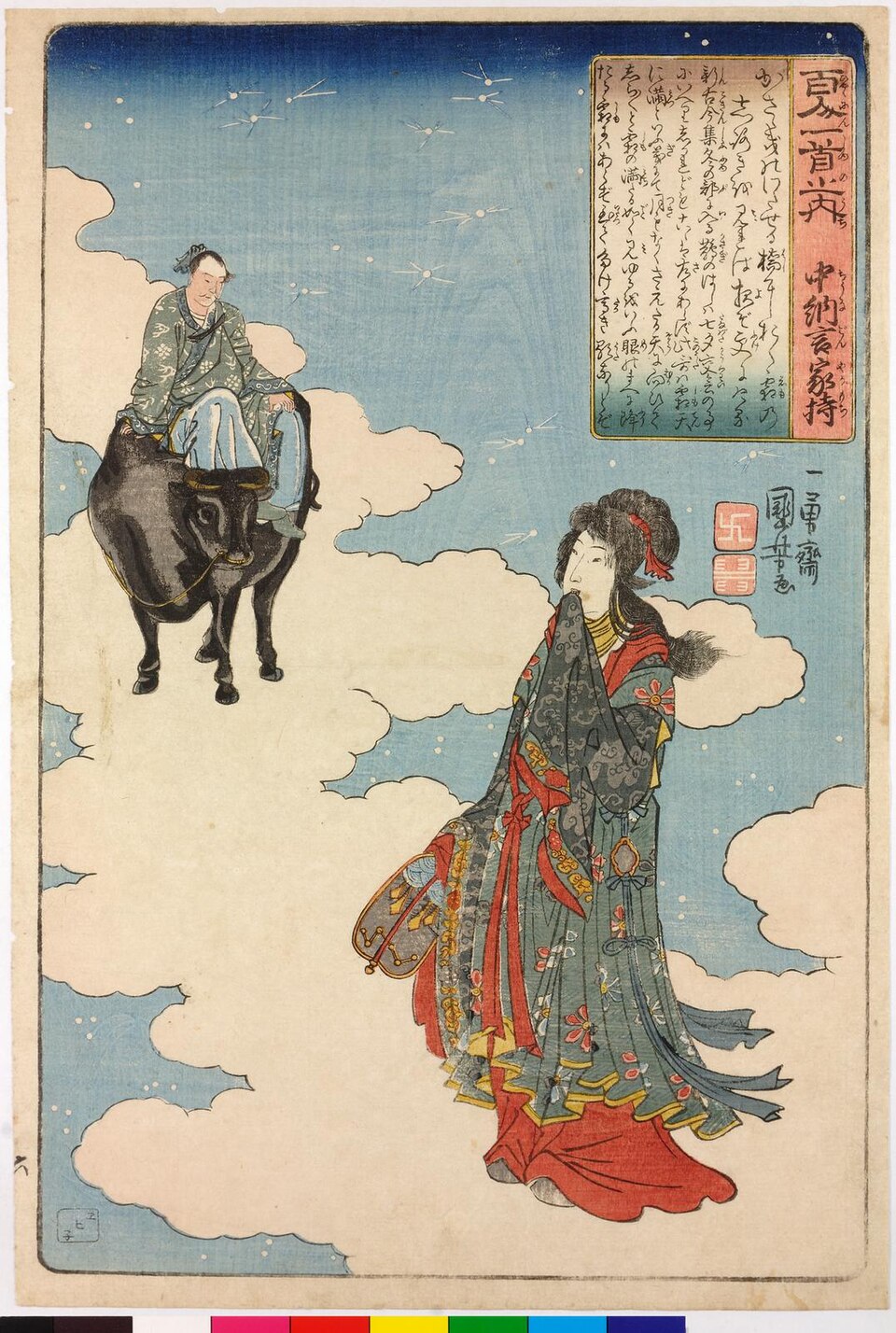 Poem 6 — Ōtomo no Yakamochi
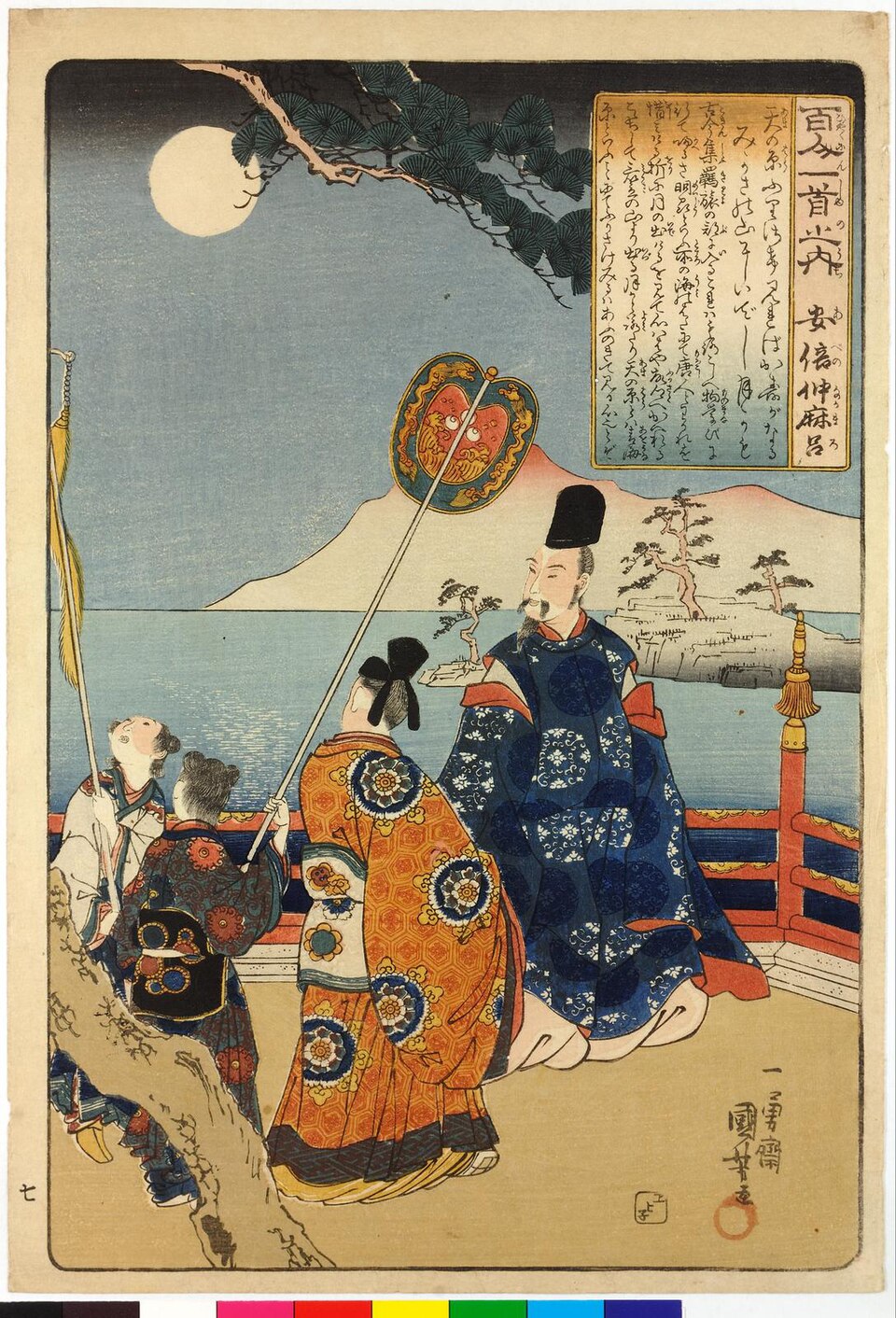 Poem 7 — Abe no Nakamaro
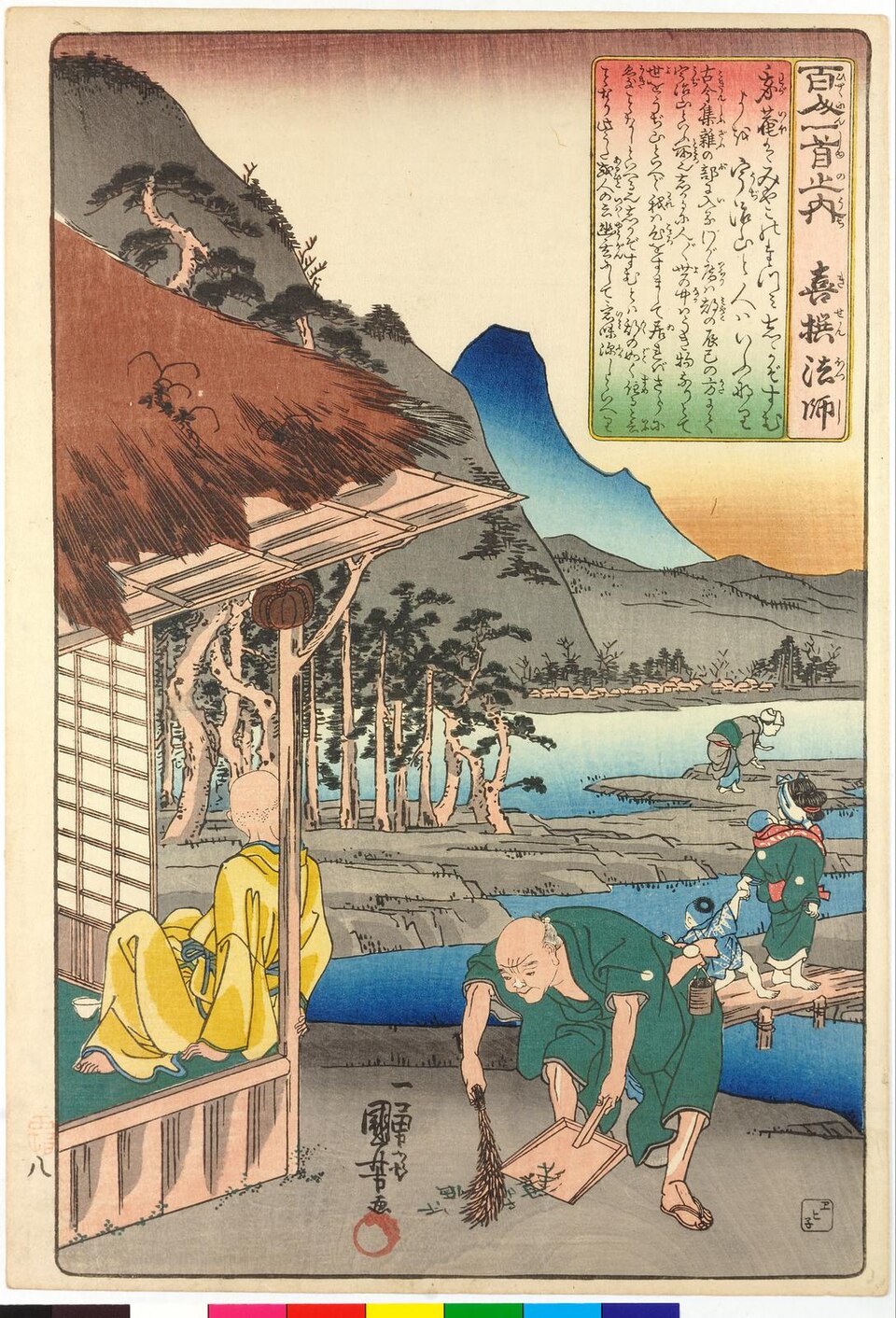 Poem 8 — Kisen Hōshi
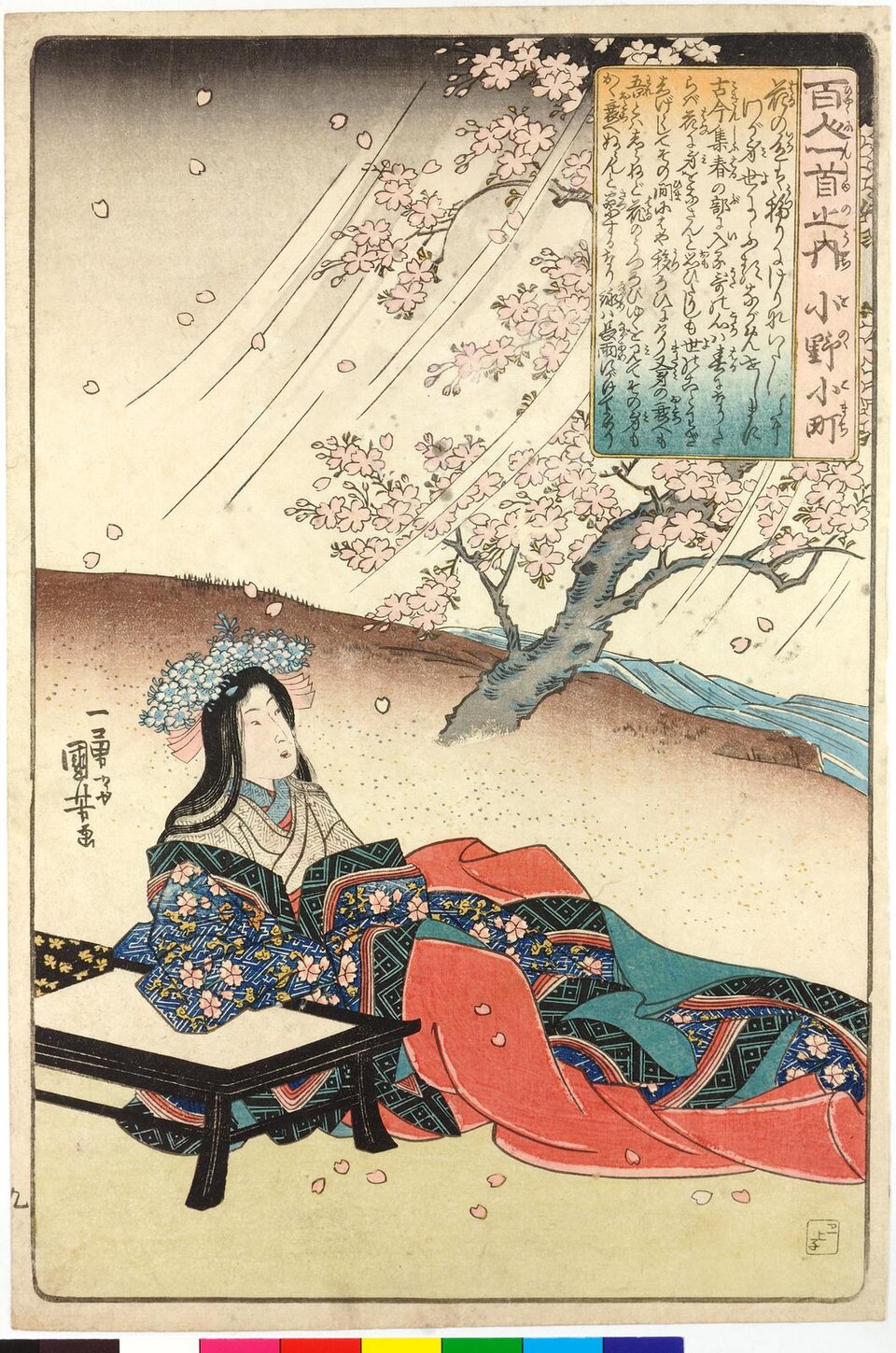 Poem 9 — Ono no Komachi
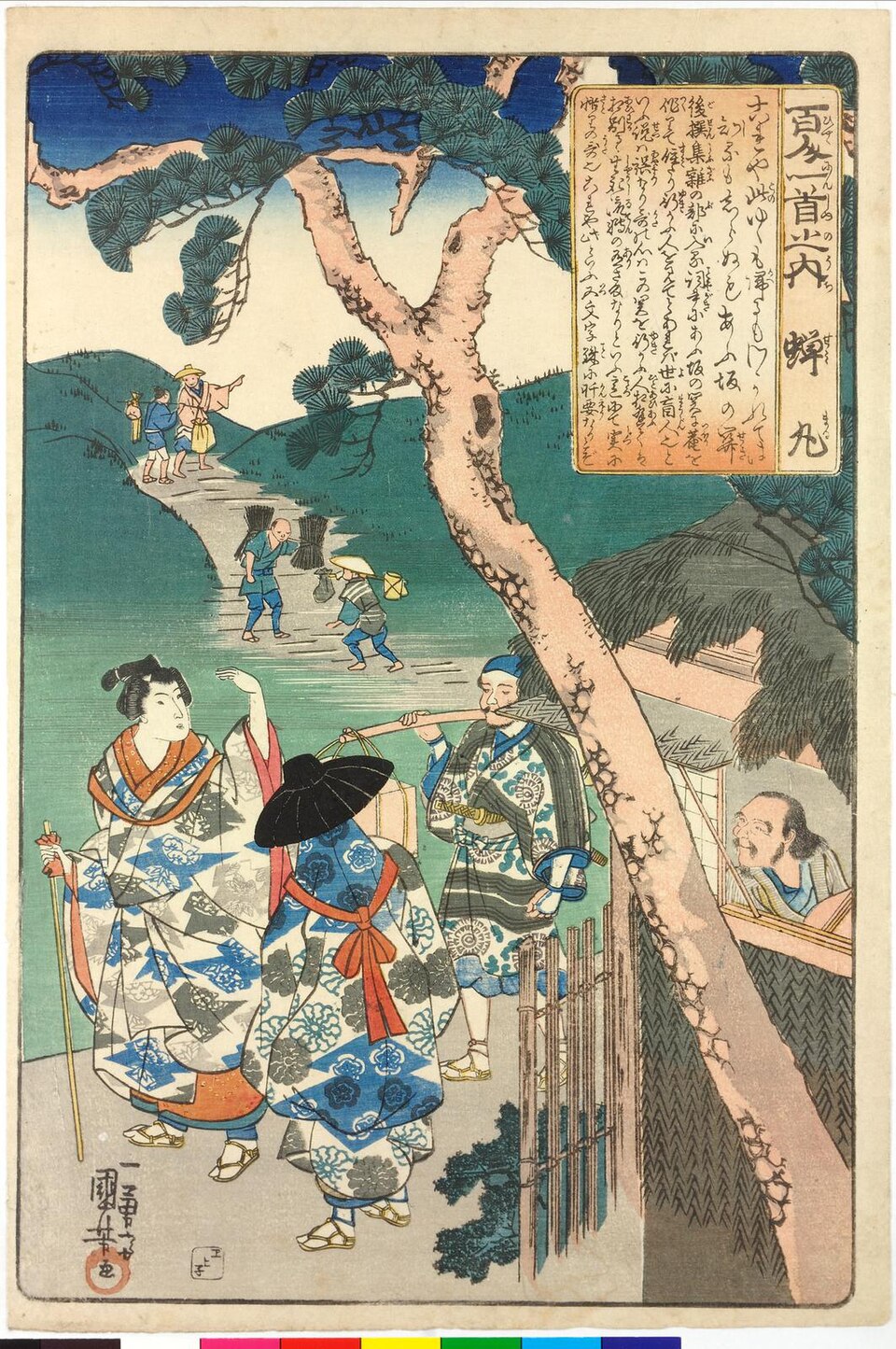 Poem 10 — Semimaru
Woodblock prints by Utagawa Kuniyoshi (c. 1840), public domain.
More poems are added regularly as the collection grows toward all 100.